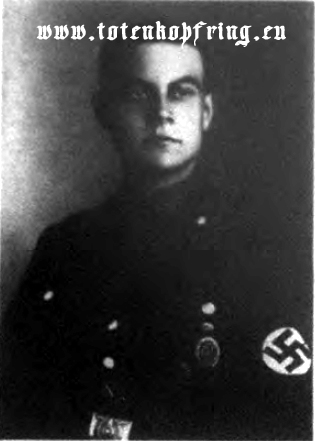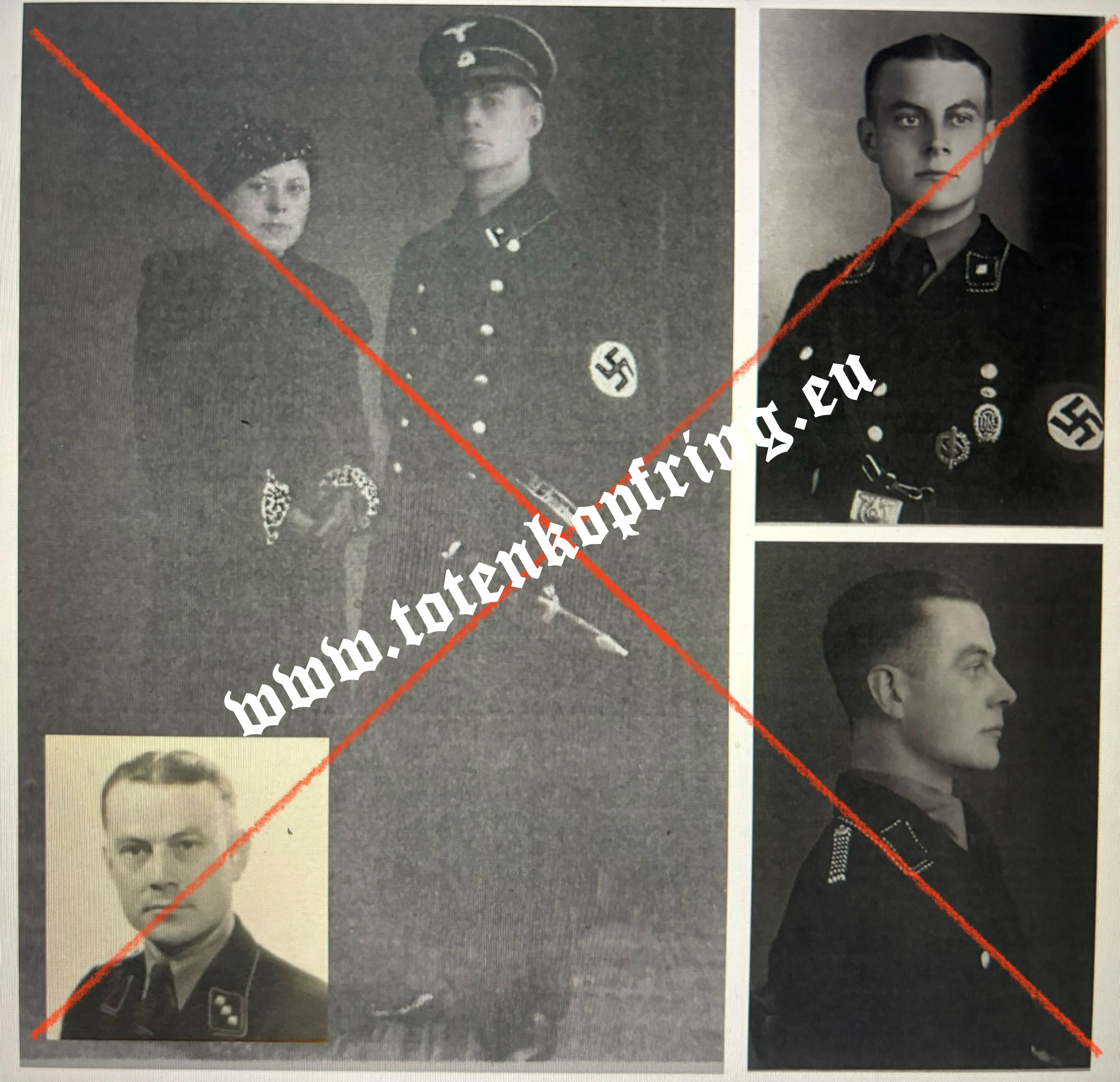
SS-Totenkopfring Franz DIESEN 20.4.1941
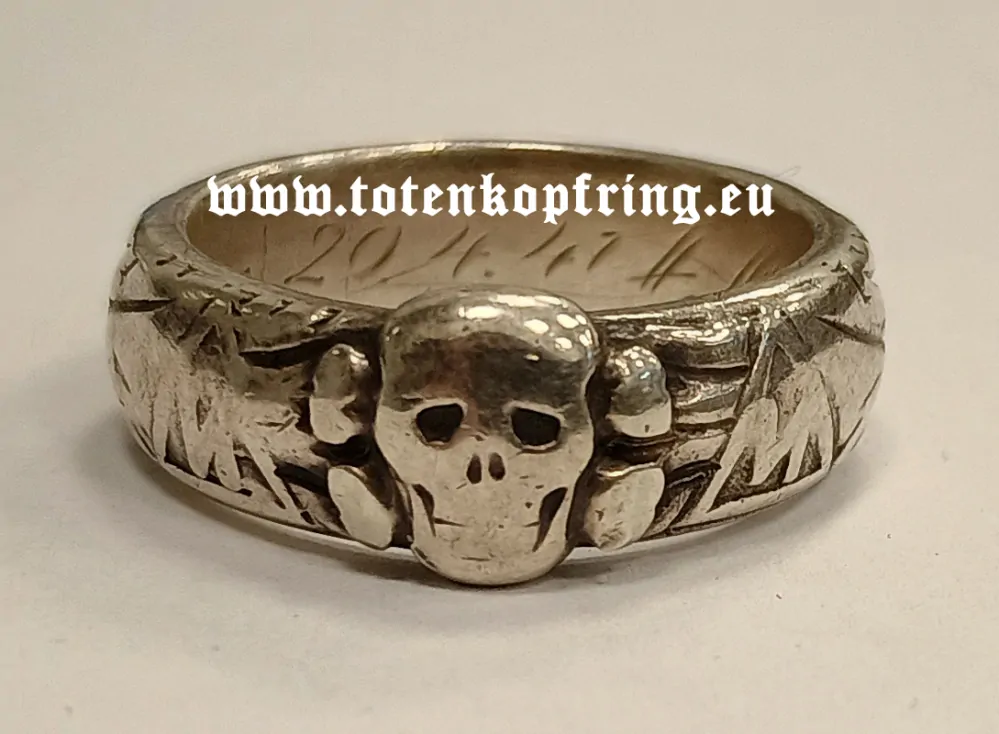


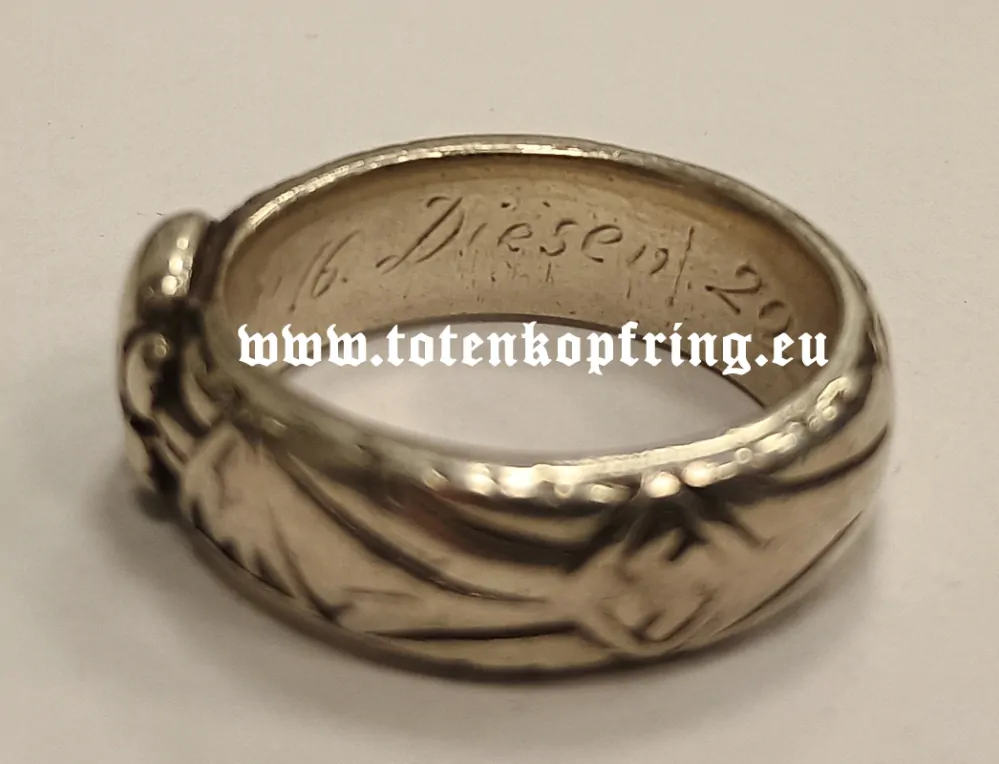
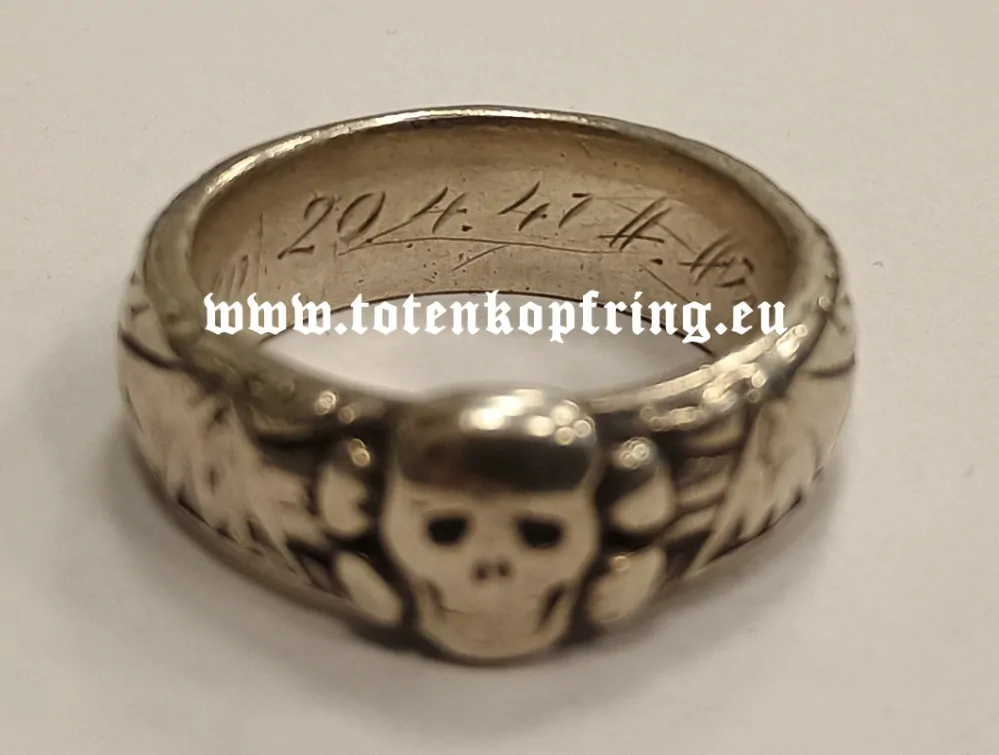

- Complete specifications
- SS-Totenkopfring Franz DIESEN 20.4.1941
Name: SS-Obersturmführer Franz DIESEN
* 10.4.1911 Nordhorn
+ 5.6.1942 East Front
SS no: 94.971
Service:
- Stab RFSS - SS-Hauptamt
- SS-RuSHA - Bodenamt Prag
- SS Standarte 10/108 Pilsen
- 11 infanterie division ( Wehrmacht )
Diameter: 18,5 mm
Weight: 10,7 g
Very nice ring and rare year 1941.
As the wearer fell on the Eastern Front in 1942 - this is apparently the ring that was returned to Wewelsburg and was found along with 200 other rings by Captain Theodore Black in 1945.
These rings were divided among the crew. I described it in my book. This particular ring is from an American veteran.
Ring bearer Franz Gerhard Diesen was a career member of the Allgemeine-SS and concurrently a Wehrmacht reserve officer who attained the rank of SS-Obersturmführer and Oberleutnant der Reserve during World War II. His service career was abruptly ended in 1942, when he fell on the eastern front near Lenigrad during a combat deployment.
He joined the ranks of the SS already on June 23, 1933 (SS-Nr. 94 971), i.e. in the early period of consolidation of the organization, and subsequently went through a smooth and uninterrupted career progression from the squad to the officer ranks. From 1937 he was also a member of the NSDAP. His professional background was administrative and clerical work, with a specialization in land, agrarian and records agenda, which fundamentally influenced his further employment within the structures of the SS.
The key period of his career was working with the SS-RuSHA (Rasse- und Siedlungshauptamt), specifically at the Bodenamt in Prague, where he worked as an official of the land office for land reform in the Protectorate of Bohemia and Moravia. In this capacity, he participated in the administrative and organizational agenda associated with the redistribution and registration of land, which ranks him among the right and cadre-wise significant SS officers working in the protectorate administration. At the same time, he was assigned to SS-Abschnitt XXXIX (Prague).
This activity was followed by his work at SS-Standarte 108 in Pilsen, where he headed the Department I at the Distriktsstelle für Bodenreform (Pilsen, Riegrova Street). The leading position within the department confirms his professional qualifications, the trust of his superiors and his stable position in the SS administrative apparatus.
Even before that, Diesen served at the SS-Hauptamt – the staff of the Reichsführer-SS, then at the SS-Erfassungsamt and SS-Ergänzungsamt, i.e. at the central personnel, records and personnel bodies of the SS. The inclusion in these authorities testifies to the fact that already in the pre-war period he was considered a reliable and proven member, suitable for work in the sensitive administrative structures of the organization.
During World War II, he was deployed on the Eastern Front, where he died in direct combat in 1942.
During the eastern campaign, Diesen served with the staff company of Infantry Regiment 23 (Infanterie-Regiment 23), which was part of the 11th Infantry Division of the Wehrmacht deployed on the Volkhov sector of the front east of Leningrad. Although he was formally assigned to a staff unit, it is clear from the surviving personal cards, reports and awards that he was actually deployed in combat in the infantry. The award of the Infantry Assault Badge (Infanterie-Sturmabzeichen) on 10 May 1942 and the award of the Iron Crisis II Class confirm his repeated participation in infantry assaults and close combat. This badge was awarded exclusively to members who actively participated in offensive combat actions, and thus excludes any purely administrative or rear rank.
On June 5, 1942, Franz Diesen was mortally wounded in the Kirishi area on the Volchov River and died of battle wounds on the same day. All available death notices, loss cards and personal records match both the date and place of his death. He was subsequently buried at the field cemetery near Kirish, which belonged to the units of the 11th Infantry Division. The mention of the division at the place of burial corresponds to the normal practice of frontline cemeteries and does not contradict his affiliation with the 23rd Infantry Regiment.
The surviving archival sources are mutually consistent in all essential respects. The recorded minor differences relate exclusively to formal record requirements, such as unit abbreviations, the type of form used or the method of registration, and do not in any way call into question the identity of the person, his rank, unit assignment, place or circumstances of death. The identity of Franz Gerhard Diesen, his direct combat engagement, the date and place of death and the place of burial are therefore unambiguously and reliably documented by the available sources.
Overall, the career of Franz Gerhard Diesen represents a typical but very well-documented example of the combination of civilian administrative expertise, service in the Allgemeine-SS and subsequent combat deployment in the Wehrmacht, ending in death at the front.
SS-Totenkopfring comes with NARA SS Folder and Martin Toman´s Certificate Of Authenticity (COA). More photos and infos by e-mail: info@totenkopfring.cz